
Emergency Preparedness
Emergency Preparedness
The Municipality of Centre Hastings provides a variety of information on its website to help educate and support residents in emergency preparedness. These resources are designed to give individuals and families the tools they need to plan ahead, stay informed, and respond effectively during emergencies.
Build a Kit
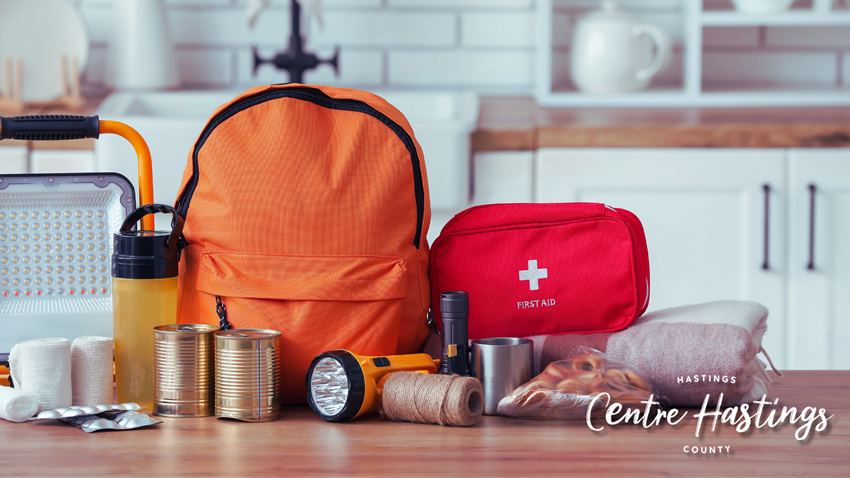
Your emergency kit should have everything you and your household would need to be safe and take care of yourselves immediately following an emergency. It should contain enough supplies to last at least three days but, if possible, more is often better.
Food & Water
| Category | Items / Details |
|---|---|
| Water | At least 4L per person per day |
| Non-Perishable Food | High-protein options recommended |
| Food Examples | Canned meat, fish, beans |
| Trail mix, dried fruit | |
| Crackers, cereals | |
| Canned or boxed juice |
Clothing & Bedding
| Category | Item | Details / Notes |
|---|---|---|
| Clothing & Bedding | Change(s) of clothing (season-appropriate) | Stay comfortable in changing conditions |
| Clothing & Bedding | Extra undergarments and socks | Maintain hygiene and warmth |
| Clothing & Bedding | Raincoat, poncho, jacket | Protection from rain and wind |
| Clothing & Bedding | Spare shoes | Backup footwear if needed |
| Clothing & Bedding | Sleeping bag, blanket, or emergency heat blanket | Warmth and rest during emergencies |
Light and Fuel
| Category | Item | Details / Notes |
|---|---|---|
| Light and Fuel | Battery-powered or crank flashlights/lamps | Reliable lighting without electricity |
| Light and Fuel | Candles with candleholder | Backup light source during outages |
| Light and Fuel | Lighter | Fire-starting tool for candles or other uses |
| Light and Fuel | Waterproof matches | Fire-starting in wet conditions |
Equipment
| Category | Item | Details / Notes |
|---|---|---|
| Equipment | Manual can opener | Access canned food without electricity |
| Equipment | Dishes and utensils | Eating and food preparation |
| Equipment | Battery-powered or crank radio | Emergency updates and information |
| Equipment | Extra batteries / power bank | Backup power supply |
| Equipment | Pen and paper | Notes and communication |
| Equipment | Pocket knife | Multi-purpose cutting tool |
| Equipment | Duct tape | Quick repairs and fixes |
| Equipment | Whistle | Signal for help |
| Equipment | Cell phone | Communication device |
| Equipment | Extra charging cables and batteries | Keep devices powered |
| Equipment | Multi-tool and work gloves | Repairs and protection |
| Equipment | Generator or alternative hydro source (if possible) | Backup power during outages |
Personal Supplies and Medication
| Category | Item | Details / Notes |
|---|---|---|
| Medical | First-aid kit | Treat minor injuries and emergencies |
| Medical | Over-the-counter and prescription medications | Essential health needs |
| Medical | Copies of prescriptions | Backup for refills during emergencies |
| Medical | Back-up prescription glasses | Vision support if originals are lost or damaged |
| Hygiene | Personal hygiene supplies | Basic cleanliness and comfort |
| Hygiene | Tissue paper, toilet paper, paper towels | Sanitation and cleaning |
| Hygiene | Hand sanitizer and wipes | Disinfection when water is limited |
| Hygiene | Disposable dust and non-medical masks | Protection from dust and airborne particles |
| Cleaning | Liquid detergent, bleach, and soap | Cleaning and sanitation |
| Cleaning | Plastic wrap, aluminum foil, re-sealable bags | Food storage and protection |
| Cleaning | Garbage and recycle bags | Waste management |
| Outdoor | Sunscreen and bug spray | Protection from sun and insects |
| Pet Care | Pet food and supplies (including toys) | Care for pets during emergencies |
Documents and Identification
| Category | Item | Details / Notes |
|---|---|---|
| Identification | Copies of birth certificate, marriage certificate, will, passports | Essential legal identity documents |
| Financial | Insurance policies | Coverage and claims information |
| Financial | Cash (small bills and change) | Useful when electronic payment is unavailable |
| Financial | Credit card information | Backup payment reference |
| Planning | Copy of emergency plan & emergency contacts | Quick access to important instructions |
| Storage | Protective, sealable bag | Keeps documents safe from water/damage |
| Navigation | Maps | Directions and location reference |
| Data | Computers or hard drives (if time allows) | Backup digital records and files |
| Category | Item | Details / Notes |
|---|---|---|
| Comfort | Small toys and stuffed animals | Emotional comfort, especially for children |
| Comfort | Playing cards and games | Entertainment during downtime |
| Comfort | Reading material | Books, magazines, or other reading options |
| Comfort | Activity books and crossword puzzles | Mental engagement and distraction |
| Comfort | Colouring books and markers | Creative activity for stress relief |
| Comfort | Charging cords for electronic devices | Keep devices usable for entertainment/communication |
| Comfort | Notebook and pen | Writing, drawing, or journaling |
| Comfort | Family photos and heirlooms |
Emotional reassurance and personal connection |
Consider additional items specific to the needs of those in your family
| Category | Group / Need | Considerations / Examples |
|---|---|---|
| Health & Nutrition | Pregnant or breastfeeding individuals | Extra food, fluids, prenatal vitamins, and comfort items |
| Childcare | Infants and small children | Diapers, formula, bottles, wipes, baby food, comfort items |
| Mobility | Persons with mobility issues | Mobility aids, accessible supplies, extra assistance planning |
| Medical | Severe allergies or dietary restrictions | Safe foods, allergy medications (e.g., epinephrine auto-injectors), ingredient awareness |
| Medical | Chronic medical conditions & equipment | Medications, medical devices, and backup power sources (consult healthcare provider) |
| Cultural & Personal | Cultural, religious, or spiritual needs | Faith-based items, dietary considerations, cultural practices |
| Pet Care | Pets | Food, water, leashes, carriers, medication, and comfort items |
Using a Generator Safely
| Category | Guideline | Details / Notes |
|---|---|---|
| Installation | Professional consultation | Have a qualified professional install and size the generator for your needs |
| Installation | Correct power rating | Ensure generator is rated for expected electrical load |
| Operation | Follow manufacturer instructions | Always read and follow all safety guidelines provided |
| Operation | No indoor use | Never run in homes, garages, basements, crawlspaces, or enclosed areas |
| Safety | Proper ventilation | Place outdoors with good airflow to prevent carbon monoxide buildup |
| Safety | Distance from openings | Keep away from windows, doors, and vents |
| Safety | Grounding and cords | Ensure proper grounding; check cords for damage and correct 3-prong plugs |
| Safety | Dry operation | Never operate in wet or flooded conditions; keep hands dry |
| Carbon Monoxide | Detectors required | Install CO detectors throughout home with working batteries or backup power |
| Health | Symptoms awareness | Move to fresh air immediately if feeling sick, dizzy, or weak |
| Fuel Handling | Refuel safely | Turn off and let generator cool before refueling |
| Fuel Storage | Safe storage | Store fuel outdoors in approved containers away from heat sources |
| Fire Safety | Avoid overload | Prevent overheating by not exceeding capacity |
| Power Management | Stagger usage | Run devices at different times to avoid overloading generator |
Vehicle breakdowns, poor weather, and traffic accidents can create difficult situations leaving you waiting for assistance or improved road conditions. Be sure to have an emergency kit in your vehicle to better manage these potential situations.
| Category | Item | Purpose / Notes |
|---|---|---|
| Vehicle Essentials | Sand, salt or non-clumping cat litter | Traction in snow/ice |
| Vehicle Essentials | Antifreeze | Prevent engine freezing |
| Vehicle Essentials | Windshield washer fluid | Maintain visibility |
| Vehicle Essentials | Jumper cables | Restart battery |
| Vehicle Essentials | Tow ropes | Towing assistance |
| Navigation | Road maps | Backup navigation |
| Safety | Fire extinguisher | Put out small fires |
| Safety | Duct tape | Quick repairs |
| Food & Water | Water | Hydration |
| Food & Water | Non-perishable high-protein food | Sustained energy |
| Warmth & Shelter | Blankets | Stay warm |
| Warmth & Shelter | Candle in deep can & matches | Light and heat |
| Clothing | Extra clothing (weather appropriate) | Stay dry/warm |
| Clothing | Extra shoes or boots | Foot protection |
| Safety Tools | Seatbelt cutter | Emergency escape |
| Medical | First-aid kit | Treat injuries |
| Winter Tools | Shovel, scraper, snowbrush | Snow removal |
| Road Safety | Warning light or road flares | Visibility to others |
| Lighting | Battery/crank flashlight or lamp | Illumination |
| Communication | Battery/crank radio | Emergency updates |
| Communication | Phone charger | Keep devices powered |
| Signaling | Whistle | Signal for help |
| Medical | OTC meds & prescriptions | Health needs |
| Hygiene | Hand sanitizer & wipes | Cleanliness |
| Hygiene | Non-medical masks | Protection |
| Hygiene | Wipes/tissues/toilet paper | Personal hygiene |
| Planning | Emergency contact list | Quick access to contacts |
| Comfort | Playing cards, games, books | Pass time |
| Planning | Copy of emergency plan | Reference in emergencies |
| Pet Care | Extra leash | Pet safety |
An emergency go-bag (also known as a grab-and-go bag) is simply a small emergency kit that's easy to take with you in case you need to leave right away. Usually, each person in your household will have their own emergency go-bag rather than one large bag for the entire family.
| Category | Item | Purpose / Notes |
|---|---|---|
| Food & Water | Ready-to-eat food and water | Sustenance during emergencies |
| Clothing & Warmth | Seasonal clothing | Stay comfortable in weather conditions |
| Clothing & Warmth | Emergency blanket | Retain body heat |
| Personal Items | Toiletries, glasses/contacts | Daily needs and vision support |
| Communication | Phone charger & battery bank | Keep devices powered |
| Communication | Battery/crank radio | Receive emergency updates |
| Lighting | Battery/crank flashlight | Visibility in the dark |
| Lighting | Extra batteries | Backup power |
| Medical | First-aid kit | Treat minor injuries |
| Medical | Personal medications | Ongoing health needs |
| Financial | Cash (small bills) | Use if cards aren’t accepted |
| Essentials | Extra car & house keys | Backup access |
| Essentials | Pen and notepad | Write important info |
Make A Plan
Being prepared for an emergency starts with having a plan. Make sure everyone in your family knows what to do during and after an emergency.
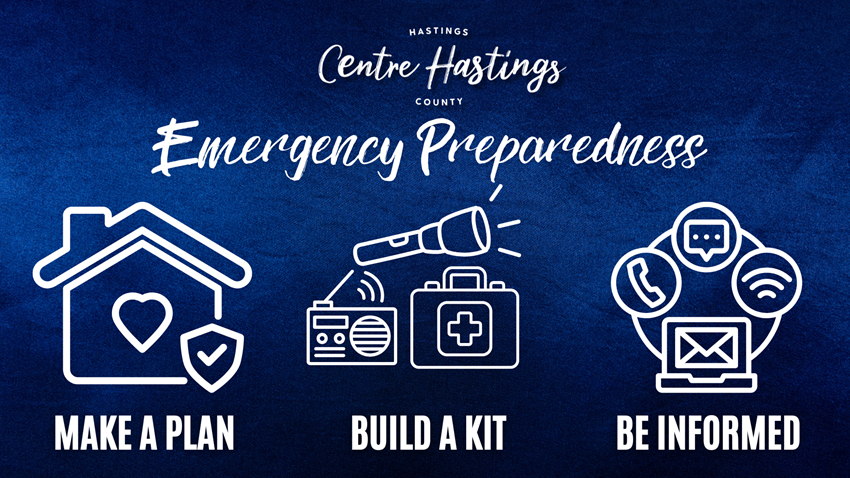
 An emergency plan should include a clear contact list of family members, important services (doctor, vet, workplace, school, utilities, insurance), and trusted contacts such as friends, neighbours, and an out-of-town contact.
It should outline how you’ll stay in touch if separated or if phones and networks are down.
Know where your emergency kits, go-bags, fire extinguishers, first aid kits, and utility shut-offs (water, hydro, gas) are located.
Map out home escape routes (doors, windows, stairways) and set meeting points inside the home (for shelter-in-place situations) and outside the home (for evacuation).
Keep copies of key documents like ID, health records, wills, and insurance papers in an accessible, safe place.
Include school or childcare emergency plans for your children.
Plan for specific needs of children, seniors, people with disabilities, pets, and consider landlords or property managers if applicable.
If you rent or live in a multi-unit building, include contact info for property management, exit locations, fire extinguishers, and AEDs if available.
Work with neighbours and consider a “buddy system” to check on each other, especially those who may need extra support.
Plan today to protect tomorrow!
Staying connected is critical—but phone and internet service may be limited or overloaded during a major emergency.
- Charge your devices as soon as severe weather or emergency alerts are issued.
- Save battery by using power-saving mode, lowering screen brightness, and closing unused apps.
- Keep a portable charger or power bank ready.
- If possible, keep a corded landline phone in your home.
- Use 9-1-1 only for real emergencies requiring immediate help.
- Keep calls brief and avoid non-essential use of phone networks.
- Use text, email, or social media when possible—they often work when calls don’t.
- If a call fails, wait 10 seconds before trying again.
- Long-distance calls may work when local ones do not.
- Avoid streaming, gaming, or heavy data use after an emergency to help keep networks available for responders.

Depending on the situation and resources available, organizations responding to an emergency and/or the Municipality of Centre Hastings may issue notifications and information using various methods and media platforms such as:
- Media releases
- Radio
- Social media
- Television
- Door-to-door
The most important thing is to seek out credible sources so you can make good decisions during a disaster. For common sources of information during an emergency visit Stay Informed.

Identify and discuss all possible exits and escape routes with your family to prepare for emergencies requiring you to evacuate your home (e.g. fire, gas leak, flood, significant structural damage).
Households with children should consider drawing a floor plan of their home, marking two ways out of each room including windows and doors to demonstrate the escape routes to them.
If you live in an apartment building, stairways should be used to escape as elevators may stop between floors, take you to a floor where fire is burning, lose power or break down.
Be sure to assign someone to assist those with mobility issues including infants and elderly persons. Ideally, they should sleep on the ground floor and have a phone in their sleeping area.
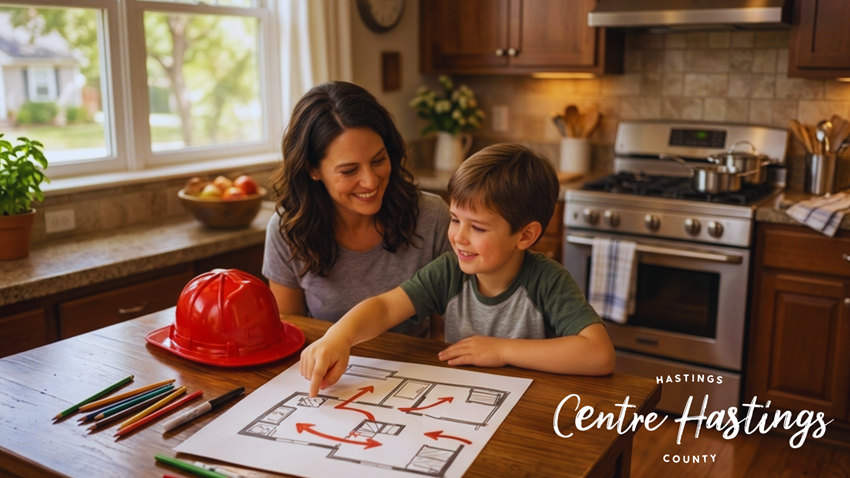
Having family meeting locations is an important part of your emergency plan. It should consider the varying scope of emergencies from those impacting your property to an entire region. Identify the following family meeting locations:
- Indoors: in case of extreme weather (e.g. tornadoes, flooding) or other emergencies where you have to stay inside (e.g. shelter-in-place during a hazardous material release).
- In your neighbourhood: in case of an emergency affecting your property (e.g. fire, gas leak).
- Outside your neighbourhood: in case an emergency happens when you’re not home and you cannot return home
- Outside your town or city: in case of a larger-scale emergency where you cannot reach your out-of-neighbourhood location or you are instructed to evacuate the area.
Make sure everyone in your family knows the address of the meeting places and discuss ways you would get there.
Create a neighbourhood support system
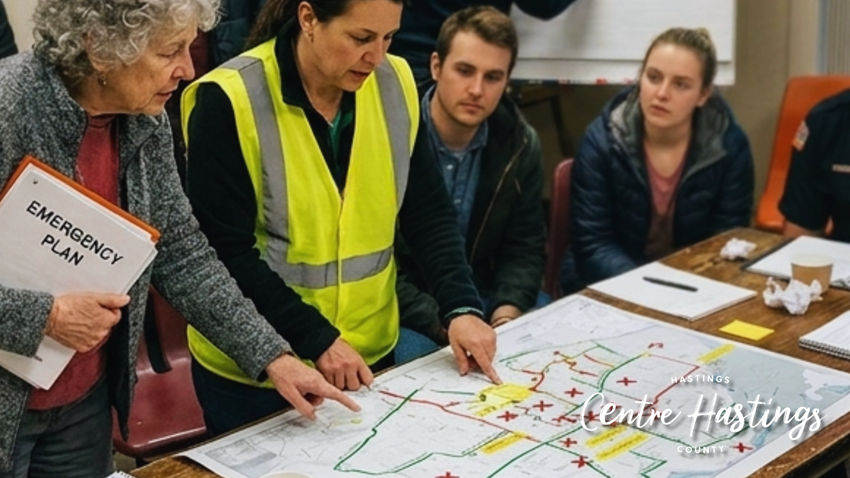
Sharing skills and resources is a key part of emergency preparedness—and it can start right in your neighbourhood.
Think about what you can offer others, and what support you might need after an emergency. Talk with your neighbours about how you can help each other before, during, and after a disaster.
Start simple: share contact information, or set up a group chat or social media group to stay connected. Building these connections ahead of time can make a big difference when it matters most and helps strengthen community resilience.
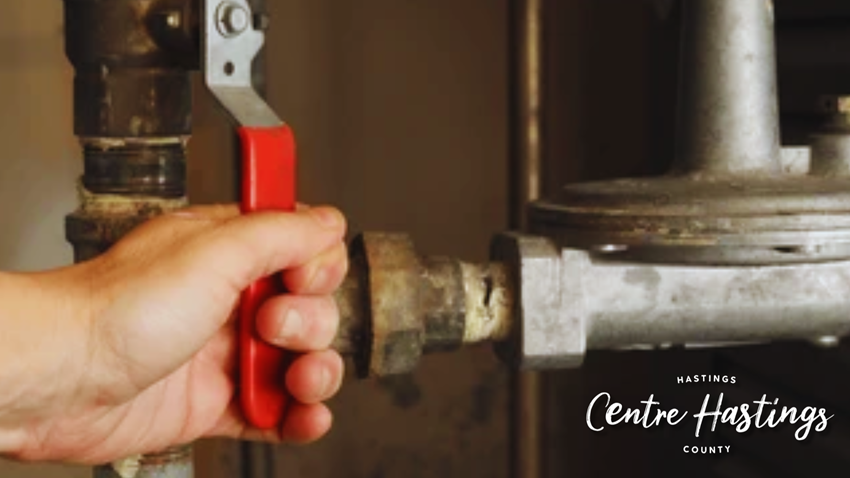
In certain emergencies, authorities will ask that you turn off your water, electricity and/or gas for safety reasons. Be sure you know how, write down instructions and post somewhere visible.
Note: Avoid shutting off your natural gas when you are ordered to evacuate unless directed by authorities to do so. Alternatively, your natural gas service may be turned off by your provider as a precautionary measure at the request of emergency officials. If your gas is shut off at the meter, DO NOT try to turn it back on. Only a licensed gas contractor can do that safely.
If you have to evacuate on a moment’s notice, you may not have time to retrieve important documents necessary for starting the recovery process quickly and efficiently. Make copies of important documents such as:
- insurance,
- driver’s licence,
- health card,
- social insurance numbers
- passport,
- birth and marriage certificates,
- medical history including prescriptions and vaccinations,
- wills, and
- pet ID tags
Keep these with your plan in a safe place. Consider sharing copies with out-of-town relatives, friends, or keep a set in a safety deposit box.
The premiums you pay for insurance coverage depends on where you live and can vary by insurance product. You should be aware of the level of risk and purchase adequate insurance for your property. At minimum, try to have enough insurance coverage to repair a damaged basement, as this is the most common part of property that is damaged by flood events.
Questions to ask your insurance provider:
- What risks are considered preventable and what needs to be done to demonstrate that you tried to prevent them (e.g. frozen pipes)?
- What types of water damage coverage does my insurance policy cover?
- If my house experiences sewer back-up and flooding at the same time, what will my policy cover?
- Are there any incentives or discounts if I install and maintain a backflow preventer or sump pump?
- If there’s wind damage to my property, what is the difference in coverage between a basic property policy and a comprehensive policy?
- If my property experiences hail damages, what are the coverage limits for my property?
Recording your property inventory
A copy of property inventory should be kept away from home either in a safety deposit box or with another family member or in a fire and water resistant safe.
Click to access the Insurance Bureau of Canada’s Personal Property Inventory checklist.

Other Considerations
Consider these tips for those who may be vulnerable or if you are a landlord:
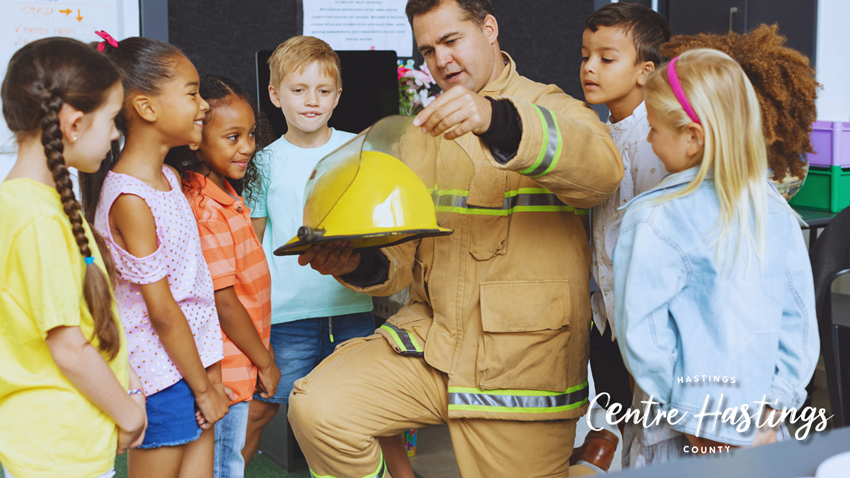
Introduce kids to emergencies early to reduce fear and anxiety. Include them in your emergency planning by reviewing contact lists, teaching them how and when to call 9-1-1, discussing possible hazards (fires, floods, storms), and practicing evacuation drills so they become familiar and less fearful.
Common reactions to stress vary by age:
- Infants: increased crying, clinginess
- Young children: regression (bedwetting, tantrums, separation anxiety), sleep issues
- Ages 7–10: fear, sadness, anger, trouble focusing, misinformation concerns
- Preteens/teens: withdrawal, emotional overwhelm, avoidance of leaving home
How to help children cope:
- Stay calm and provide reassurance
- Explain what is happening in simple terms
- Validate their feelings and fears
- Maintain normal routines when possible
- Limit exposure to distressing media
- Let them know first responders and community helpers are there for support
- Seek professional help if needed
Click for more information on emergency preparedness for children.
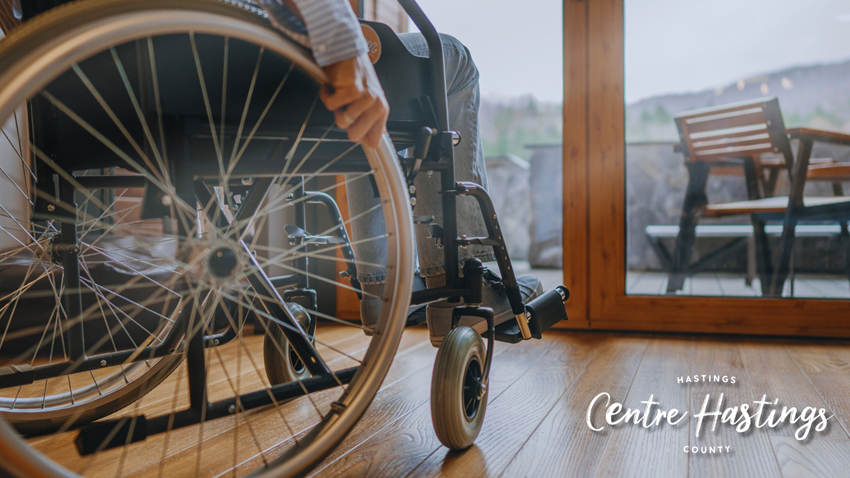
If you have a disability or special needs, it’s important to build a support network of family, friends, neighbours, and healthcare providers who understand your requirements and can assist during emergencies. Share key information such as mobility needs, medical history, dietary needs, insurance details, and medication with them.
Prepare by creating a buddy system, keeping emergency contacts in your plan, and developing a communication strategy for check-ins during emergencies. Provide a trusted person with a spare key and access to your emergency plan and kit.
Work with healthcare and home care providers to plan for backup services and ensure you have extra prescriptions and supplies. Include clear instructions for medical equipment and medications, and teach helpers how to use them if needed. Plan for power outages if you rely on life-sustaining equipment.
Additional safety steps include wearing a MedicAlert bracelet, carrying identification, using a personal alarm, and keeping necessary medications, supplies, and equipment in your emergency kit.
Click for more information on emergency preparedness of people with disabilities.
Older adults who rely on care may be more vulnerable during emergencies, so supports should be arranged in advance. It’s important to build a personal support network by involving family, friends, and neighbours, and creating a buddy system.
Key preparedness steps include:
- Sharing emergency contacts and creating a communication plan for check-ins during emergencies
- Providing a trusted person with a home key and copies of your emergency plan and kit locations
- Coordinating with home care and medical providers about backup services and emergency plans
- Discussing with healthcare providers how to maintain extra or valid prescriptions for emergencies
- Including written instructions for medical equipment, mobility aids, and medications, and teaching others how to use them
- Planning for backup power for life-sustaining equipment
- Stocking assistive devices and essentials (e.g., canes, walkers, hearing aids, batteries, medications, dietary food, and spare orthotics) in an emergency kit

Pets should be included in your emergency plan, including supplies, shelter options, and ways to find them if they get lost. During emergencies, pets may behave unpredictably and face hazards at ground level.
A pet emergency kit should include food, water, bowls, paper towel, and a can opener; a blanket and toy; leash/harness and muzzle if needed; litter and bags; gloves; a carrier; medications and medical records; a photo of you with your pet; feeding and care instructions; ID tags, microchip info, and vet contact details; and a copy of their licence if required.
Click for additional items to consider for specific animals and a pet first aid kit.
Pets should be taken with you during an evacuation if possible, as leaving them behind can be unsafe. However, many shelters do not accept pets, so owners should plan ahead for pet-friendly options and backup care.
Preparation includes setting up a buddy system, arranging trusted friends or relatives outside the area, checking pet-friendly hotels, and identifying kennels or veterinarians that can provide emergency care. A pet emergency kit with essentials like a carrier and leash is also important.
If you must leave pets at home, do not cage or tether them. Leave plenty of food and water, and post a note on the door with contact details, time of departure, and information about the pets left inside.
Click for more information on how to keep pets safe in an emergency.
Landlords should keep buildings safe and livable during emergencies by improving resilience (like backup power and better drainage), and maintaining a clear emergency plan for tenants.
Disaster can strike while working or when kids are in school so it is important to know their emergency plans and how to stay informed. Find out about their evacuation plans and how they will reach emergency contacts. Parents should confirm what kind of authorization is needed by the school to release their children to someone other than themselves. Be sure to discuss these plans with your children and let them know who could pick them up in an emergency.

Additional Resources
Power outages can happen at any time.
Whether you’re without power for minutes, hours, or days, stay safe with the tips below:
-
Keep your emergency kit stocked.
Make sure you have portable light sources (flashlights, candles, glow sticks), extra batteries, non-perishable food, and plenty of potable water. -
Stay clear of downed power lines.
There may be live wires in your area. Keep yourself and others at least 10 metres (about the length of a school bus) away. Be cautious — even wires that have been down for days may still be live. -
Keep food safe.
Avoid opening refrigerator and freezer doors to help preserve food. Never use charcoal or gas barbecues, camping stoves, or generators indoors, as they pose serious fire and carbon monoxide risks. -
Know when to leave.
If your home becomes too cold or too hot and it's safe to do so, go to an alternate location. Be sure to take all household members — including pets — with you.
For more information, visit ontario.ca.

Pets and Emergencies
Pets are members of your household, and their safety should be part of your emergency planning. Making arrangements before an emergency increases your pet’s chances of survival and helps reduce their stress. Be ready to take your pet—and their emergency kit—with you if you need to evacuate.
Pet Emergency Preparedness Kit Checklist
Prepare a pet emergency kit and store it alongside your household emergency kit. Check and update the contents at least twice a year.
Recommended items for dogs and cats:
-
Food and potable water
-
Bowls, paper towels, and a can opener
-
Blanket and a small toy
-
Sturdy leash/harness
-
Carrier for transportation
-
Cat litter and pan (if needed), and plastic bags
-
Medications and medical records (including vaccinations)
-
Current photo of your pet (in case they get lost)
-
Information on feeding schedule, medical or behavioral issues
-
Up-to-date ID tag with your contact info and veterinarian’s details
-
Copy of license (if required)
-
Muzzle (if required)
🐾 Emergency kit contents may vary depending on the type of pet. Contact your veterinarian or visit OntarioSPCA.ca for specific advice.
Pets and Evacuations
If it’s too dangerous for you to stay, it’s too dangerous for your pet.
Do not leave pets behind during an evacuation. Plan ahead to ensure a safe place for them.
Before an emergency:
-
Find out your municipality’s evacuation centre locations and pet policies.
-
Contact hotels/motels outside your immediate area to check if they accept pets during emergencies.
-
Ask friends or relatives outside your area if they can shelter your pet.
-
Include your pet in household or local emergency drills.
If you're not home during an emergency:
Set up a buddy system with a trusted neighbor who can care for your pet in your absence.
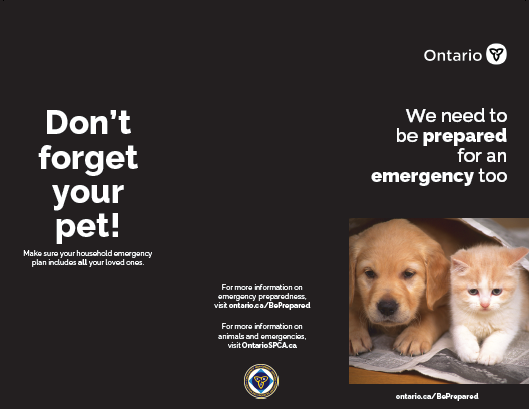

Emergency Preparedness Starts With You
Visit ontario.ca/BePrepared to create your Emergency Preparedness Action Plan.
Evacuation & Shelter-in-Place
In an emergency, you may be instructed to evacuate or to shelter-in-place. These orders will be broadcast via TV, radio, government websites, social media, or wireless public alerts.
Evacuation
-
Only evacuate when instructed by emergency officials.
-
If safety permits, take your pets with you.
-
Bring your emergency kit and go to your designated meeting place or reception centre.
Shelter-in-Place
-
Close and lock all windows and exterior doors.
-
Turn off fans, heating, and air conditioning systems to prevent outside air from entering.
Household Emergency Plan
Why Plan Ahead?
Creating an emergency plan and discussing it with your household can reduce fear and anxiety during an actual event.
What to Include
-
Review your emergency plan annually.
-
Practice going to your designated meeting places.
Meeting Places
Identify two safe meeting spots in case you must leave your home or can’t return:
-
One close to home
-
One outside your neighbourhood
Stay Connected During an Emergency
-
Keep calls and texts short to reduce network congestion.
-
Only call 9-1-1 for life-threatening police, fire, or medical emergencies.
-
Preserve phone battery by dimming your screen and avoiding non-essential apps and videos.
-
Forward your home phone to your mobile if you evacuate.
Alert Ready
Canada’s emergency alert system delivers life-saving messages through:
-
Television
-
Radio
-
Compatible LTE-connected wireless devices
Learn more at AlertReady.ca
Additional Resources
Learn more through your local municipal office or visit the following organizations for emergency preparedness and updates:
-
Canadian Red Cross
-
Environment and Climate Change Canada
-
Hydro One
-
Insurance Bureau of Canada
-
Public Safety Canada

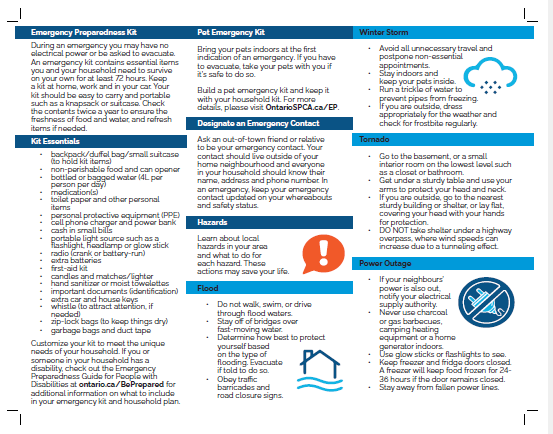
Information on flood/sewer back up clean up, from Public Safety Canada: http://www.getprepared.gc.ca/cnt/hzd/flds-ftr-eng.aspx
How to prepare for and what to do during a power outage: Power Outages-What to do
Municipality of
Centre Hastings
7 Furnace Street,
PO Box 900,
Madoc, ON K0K 2K0
Phone: 613-473-4030